Kunwari Cheekh Episode 2 -- HiWEBxSERIES.com

Kunwari Cheekh Episode 2 -- HiWEBxSERIES.com

Index

Home
Introduction
Configuring XPax
Using XPax
Main Screen
Manifest Screen
Diagram Screen
Aircraft Screen
Report Screen
Options Screen
Networked Configuration
Credits

Appendix
SimConnect Troubleshooting


Welcome To XPax - A Passenger Simulation Add-on for FSX and FS9!

Kunwari Cheekh: Episode 2 -- Hiwebxseries.com

Episode 2 deepens the moral ambiguity established earlier. No one is offered a clean conscience; instead, loyalties are porous. A character who at first seems a betrayer reveals small acts of kindness; a once-trusted figure reveals an omission that becomes a wound. The script leans into multiplicity — memory is not a single narrative but a set of overlapping, often contradictory accounts that must be sifted by the living. This makes Rukhsana’s task less about discovering a single truth and more about learning which stories deserve to be kept alive.

Rukhsana moves through rooms with the deliberateness of someone cataloguing loss. She is not the melodramatic heroine of gossip; she is the inheritor of unresolved silences. Her hand pauses on a dressing table mirror clouded with dust. For a second the mirror obliges and gives back not a single face but a collage: a childish grin, a prayer bead, an empty comb. Episode 2 resists tidy explanation. Instead it gathers its intensity in the small, decisive things — a snapped bangle, the rustle of a letter no one finished writing, the quiet clicking of a ceiling fan that seems to count down toward confession. Kunwari Cheekh Episode 2 -- HiWEBxSERIES.com

By the close, there is no dramatic resolution, only a recalibration. A door closes but not with finality; it clicks softly, as if waiting to be opened again. The episode ends on an image rather than an answer: light pooling on a steps’ worn edge, a slow, almost casual sign that life continues in the crevices where certainty has frayed. The effect is unsettling and humane — a reminder that the real hauntings are often ordinary, and that confronting them requires patience, attention, and the willingness to inhabit uncomfortable half-truths. Episode 2 deepens the moral ambiguity established earlier

Visually, the episode prefers close framings and off-center compositions. Faces are frequently cut by door frames or bisected by half-closed curtains, suggesting both intimacy and obstruction. The color palette is tired jewel tones: cumin, bottle green, and the iron sheen of twilight. Lighting is patient, allowing shadows to hold on the edge of the frame as if waiting for someone to name them. Costume and set dressing are exacting without being showy: a moth-eaten shawl, a tea glass with a hairline crack, a child’s schoolbag left by the threshold. These details feel curated to accumulate unease rather than to shock. The script leans into multiplicity — memory is

The courtyard sits in a late-evening hush, a stray bulb humming above the cracked tile. In Episode 2 the house itself becomes a character: its shutters breathe, its stairwell remembers footsteps that never return, and the smell of jasmine clings to memory like a photograph left in sunlight. The camera lingers where a wall has peeled away, revealing earlier layers of paint — each layer a life someone tried to cover, each flake a secret refusing to stay hidden.

Dialogues are underplayed, the kind of exchanges that breathe around one another: half-pleas, clipped refusals, a question that keeps folding back into itself until no one can tell whether it’s been answered. When characters do speak, their lines are loaded like jars on a shelf — useful, preserved, labeled with dates from the past. The writing lets silences do the heavy lifting; silence reveals alliances more frankly than protestations ever could. Tension is cumulative: an unresolved argument in the kitchen, a neighbor’s back turned too long on the balcony, a child tracing names in the condensation on a windowpane.

Tone-wise, Episode 2 favors intimacy over spectacle, moral ambiguity over melodrama, and texture over plot. It invites contemplation rather than immediate catharsis, asking its audience to listen for the soft, stubborn sounds that speak of things we would rather keep silent.
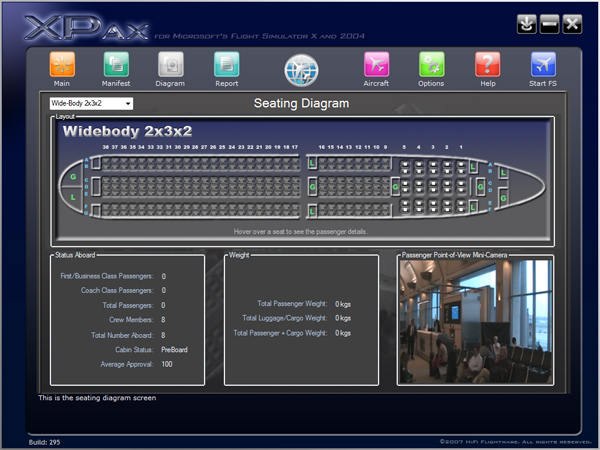
 
Passengers and their individual statistics including health and approval rating are constantly updated based on the performance of the flight. The entire flight process, from pre-boarding to deplaning, is simulated and supplemented by multimedia content including audio and video.
 
Kunwari Cheekh Episode 2 -- HiWEBxSERIES.com
Cabin attendants, Gate Attendants and Captain voice sets are included and fully customizable using the easy options screen. New voice sets can be recorded with a few clicks of the mouse. Video, provided in a “Passenger point-of-view” format is also fully customizable within the interface with bit of simple movie production.
 
XPax is designed to run along-side FS and automatically senses when certain phases of the flight take place, launching appropriate events, audio and video.
 
With XPax, everything you do is monitored closely and the passengers will react accordingly.  Using abrupt control movements, climbing or descending too fast, obtaining unusual attitudes, too many g-forces, aggressive taxi turns or a hard landing will all reduce passenger satisfaction and in extreme cases will cause injuries!
 
Many other features, as well as a comprehensive user guide and top-notch HiFi customer support are all included.
 
Features

Episode 2 deepens the moral ambiguity established earlier. No one is offered a clean conscience; instead, loyalties are porous. A character who at first seems a betrayer reveals small acts of kindness; a once-trusted figure reveals an omission that becomes a wound. The script leans into multiplicity — memory is not a single narrative but a set of overlapping, often contradictory accounts that must be sifted by the living. This makes Rukhsana’s task less about discovering a single truth and more about learning which stories deserve to be kept alive.

Rukhsana moves through rooms with the deliberateness of someone cataloguing loss. She is not the melodramatic heroine of gossip; she is the inheritor of unresolved silences. Her hand pauses on a dressing table mirror clouded with dust. For a second the mirror obliges and gives back not a single face but a collage: a childish grin, a prayer bead, an empty comb. Episode 2 resists tidy explanation. Instead it gathers its intensity in the small, decisive things — a snapped bangle, the rustle of a letter no one finished writing, the quiet clicking of a ceiling fan that seems to count down toward confession.

By the close, there is no dramatic resolution, only a recalibration. A door closes but not with finality; it clicks softly, as if waiting to be opened again. The episode ends on an image rather than an answer: light pooling on a steps’ worn edge, a slow, almost casual sign that life continues in the crevices where certainty has frayed. The effect is unsettling and humane — a reminder that the real hauntings are often ordinary, and that confronting them requires patience, attention, and the willingness to inhabit uncomfortable half-truths.

Visually, the episode prefers close framings and off-center compositions. Faces are frequently cut by door frames or bisected by half-closed curtains, suggesting both intimacy and obstruction. The color palette is tired jewel tones: cumin, bottle green, and the iron sheen of twilight. Lighting is patient, allowing shadows to hold on the edge of the frame as if waiting for someone to name them. Costume and set dressing are exacting without being showy: a moth-eaten shawl, a tea glass with a hairline crack, a child’s schoolbag left by the threshold. These details feel curated to accumulate unease rather than to shock.

The courtyard sits in a late-evening hush, a stray bulb humming above the cracked tile. In Episode 2 the house itself becomes a character: its shutters breathe, its stairwell remembers footsteps that never return, and the smell of jasmine clings to memory like a photograph left in sunlight. The camera lingers where a wall has peeled away, revealing earlier layers of paint — each layer a life someone tried to cover, each flake a secret refusing to stay hidden.

Dialogues are underplayed, the kind of exchanges that breathe around one another: half-pleas, clipped refusals, a question that keeps folding back into itself until no one can tell whether it’s been answered. When characters do speak, their lines are loaded like jars on a shelf — useful, preserved, labeled with dates from the past. The writing lets silences do the heavy lifting; silence reveals alliances more frankly than protestations ever could. Tension is cumulative: an unresolved argument in the kitchen, a neighbor’s back turned too long on the balcony, a child tracing names in the condensation on a windowpane.

Tone-wise, Episode 2 favors intimacy over spectacle, moral ambiguity over melodrama, and texture over plot. It invites contemplation rather than immediate catharsis, asking its audience to listen for the soft, stubborn sounds that speak of things we would rather keep silent.

Requirements:

  • Microsoft Flight Simulator X or Flight Simulator 2004

  • FSX Requires Service Pack 1 (which includes SP1 SimConnect), and FS9 requires FSUIPC v3.75 or later (available free from http://www.schiratti.com/dowson.html)

  • Windows XP or later (earlier operating systems not officially supported)

  • 1GB+ RAM

  • 500MB+ Free Hard Drive Space

  • .NET 2.0 (included with installation package)

  • Windows Media Player v11 or later

  • Internet Explorer v7 or later