Enhanced/Dual Powered
Willem EPROM Programmer
User Guide
Main Board / Cables
Main Board PCB3.5
Main Board PCB4E

Main Board PCB5.0

Main Board PCB5.5C

|
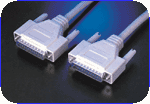
Parallel Data Cable (Printer extension cable, with male-female 25 pin connector, and pin to pin through) |
A-A type USB cable(for power) |
|
|
|
Optional Items:
|
ATMEL 89 Adapter |
ATMEL PLCC 44 Adapter |
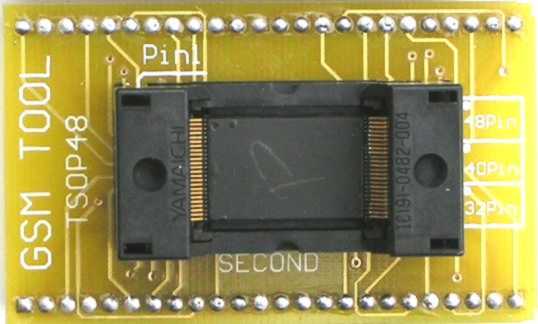
TSOP 48 Adapter |
|
|
|
|
|
FWH/HUB PLCC32Adapter |
PLCC32 Adapter |
SOIC Adapter(Simplified) |
|
On-Board |
On-Board |
|
|
AC or DC Power Adapter (9V or 12V, 200mA) |
SOIC Adapter(Professional) |
|
|
|
|
|
Risk, Agency, and the Metrics We Use An “index” also implies ranking and comparison. How does 127 hours compare to other stories of survival? We instinctively measure calamities against each other: longer entrapment suggests deeper endurance; fewer resources imply greater heroism. But ranking risks flattens complexity. A two-hour car crash can destroy a life as irrevocably as months trapped in rubble. By turning danger into indices—hours trapped, miles from help, oxygen percent—society institutionalizes a calculus of worth around suffering. That calculus biases everything from news headlines to rescue funding. We should question whether such metrics help or hinder our ethical response: do they elicit compassion or commodify pain?
Danny Boyle’s 2010 film 127 Hours condensed a brutal, luminous human ordeal into 94 minutes of cinema: a climber, Aron Ralston, trapped in a Utah canyon, forced by circumstance and conscience into an act that both horrified and liberated him. The film’s title—127 Hours—anchors itself to an exactitude of time, a factual ledger of survival. But if we read “index” broadly—an ordering device, a measure that assigns significance—then an “index of 127 hours” becomes a useful provocation. It invites us to think about how we quantify crises, how we narrate endurance, and how societies create metrics that translate private suffering into public meaning. index of 127 hours
Time as Measure and Meaning The simplest index is the chronological: 127 hours is a count of minutes and seconds, an unambiguous temporal anchor. But quantities of time rarely exist as neutral facts; they’re interpretive frames. To a loved one, a moment may be a lifetime; to an emergency responder, minutes can be triage categories. The film—and the true story behind it—shows how duration transforms into a narrative device. The counted hours become milestones of pain, of shifting mental states, and of decision. This chronometry comforts us with order while it intensifies the drama: quantified time gives the mind a handle on chaos. Risk, Agency, and the Metrics We Use An
Hardware Installation & Configuration
|
Installation Steps
(Note: the LPT port of PC MUST set to ECP or ECP+EPP during BIOS setup. To enter the BIOS setting mode, you need press "Del" key or "F1" key during the computer selftest, which is the moment of computer just power up.)
Software Version To Use | |||
| |||
|
| |||
|
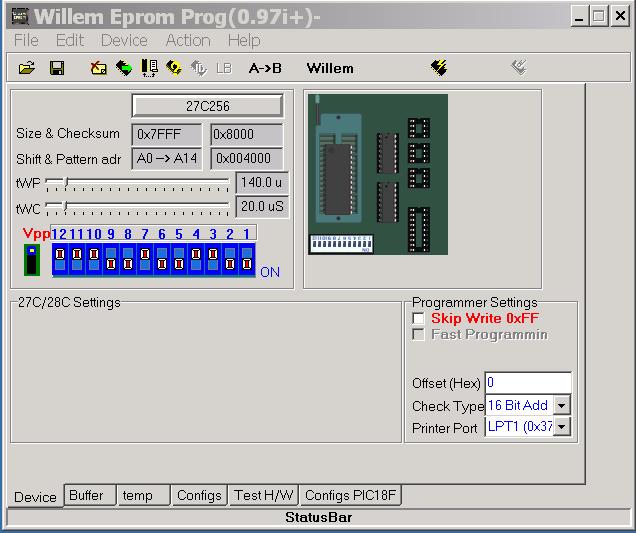
The software interface:
| |||
|
| |||
|
Hardware
Check
| |||
|
PCB3.5/PCB4E
PCB5.0
PCB5.5C
Note: the Vcc setting jumper only has effect when you are using AC adaptor as power source. For the USB power only 5V Vcc is available. For the PCB5.5C, set DIP steps: 1. press DIP Set button twice to check current DIP bit position. Then set it again for ON or OFF. 2. press DIP Bit shift button to shift the DIP bit position to where need to set. And then press DIP Set button twice to check current DIP bit position. Then set it again for ON or OFF. 3. Repeat those steps till all DIP bit ae set same as software indicated. For PCB5.5C voltage and Special chip selection: 1. Put back the safety jumper. 2. Press the voltage button and hold for 1 second, the voltage LED should move to next. Repeat till desired voltage LED light up. 3. Press the chip selection button and hold for 1 second, the chip LED should move to next. Repeat till desired LED light up. 4. Remove the safety jumper to lock the selected voltage and chip selection
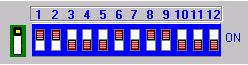
DIP Switch (PCB3.5, PCB5.0)
When programming one chip, follow the program prompt to set DIP switch .
|
Risk, Agency, and the Metrics We Use An “index” also implies ranking and comparison. How does 127 hours compare to other stories of survival? We instinctively measure calamities against each other: longer entrapment suggests deeper endurance; fewer resources imply greater heroism. But ranking risks flattens complexity. A two-hour car crash can destroy a life as irrevocably as months trapped in rubble. By turning danger into indices—hours trapped, miles from help, oxygen percent—society institutionalizes a calculus of worth around suffering. That calculus biases everything from news headlines to rescue funding. We should question whether such metrics help or hinder our ethical response: do they elicit compassion or commodify pain?
Danny Boyle’s 2010 film 127 Hours condensed a brutal, luminous human ordeal into 94 minutes of cinema: a climber, Aron Ralston, trapped in a Utah canyon, forced by circumstance and conscience into an act that both horrified and liberated him. The film’s title—127 Hours—anchors itself to an exactitude of time, a factual ledger of survival. But if we read “index” broadly—an ordering device, a measure that assigns significance—then an “index of 127 hours” becomes a useful provocation. It invites us to think about how we quantify crises, how we narrate endurance, and how societies create metrics that translate private suffering into public meaning.
Time as Measure and Meaning The simplest index is the chronological: 127 hours is a count of minutes and seconds, an unambiguous temporal anchor. But quantities of time rarely exist as neutral facts; they’re interpretive frames. To a loved one, a moment may be a lifetime; to an emergency responder, minutes can be triage categories. The film—and the true story behind it—shows how duration transforms into a narrative device. The counted hours become milestones of pain, of shifting mental states, and of decision. This chronometry comforts us with order while it intensifies the drama: quantified time gives the mind a handle on chaos.